
El Niño 2026 in San Diego: How to Prepare Your Home for Heavy Rain
El Niño 2026 in San Diego: How to Prepare Your Home for Heavy Rain

Introduction
With El Niño in San Diego, homeowners may be paying closer attention to the possibility of winter storms and periods of heavy rainfall. While El Niño does not guarantee an unusually wet season in San Diego, preparing your home before the rainy season can help identify potential problems before they turn into costly repairs.
Water can find its way into a home through damaged roofing, cracked or deteriorated stucco, poorly sealed windows and doors, and other vulnerable areas of the exterior. Problems that aren’t noticeable during San Diego’s dry weather may become more apparent after repeated or heavy rain.
In this guide, we’ll cover the key areas of your home to inspect, common warning signs of water intrusion, preventive maintenance you can perform before the rainy season, and situations where it may be a good idea to have a professional evaluate the damage.

What Could El Niño 2026 Mean for San Diego?
El Niño is a climate pattern characterized by unusually warm ocean temperatures in the central and eastern equatorial Pacific. These warmer conditions can influence weather patterns across the United States, including Southern California. According to NOAA’s Climate Prediction Center, El Niño is currently strengthening and is expected to continue through the winter of 2026–27.
However, a strong El Niño does not automatically mean San Diego will experience extreme rainfall or flooding. NOAA notes that even stronger El Niño events do not guarantee typical weather impacts in every location. Individual winter storms can still bring periods of significant rainfall, making preparation important for local homeowners.
Before the rainy season arrives, homeowners should inspect their roofs, stucco, windows, doors, and drainage systems for existing damage or areas where water could enter. Addressing these vulnerabilities early can help reduce the risk of discovering leaks or exterior damage in the middle of a storm.
Start With a Roof Inspection Before Heavy Rain
Your roof is one of your home’s primary defenses against rain, making it an important place to start when preparing for the rainy season. Small roofing problems can be easy to overlook during San Diego’s long stretches of dry weather, but they may become more noticeable once the roof is exposed to prolonged or heavy rainfall.
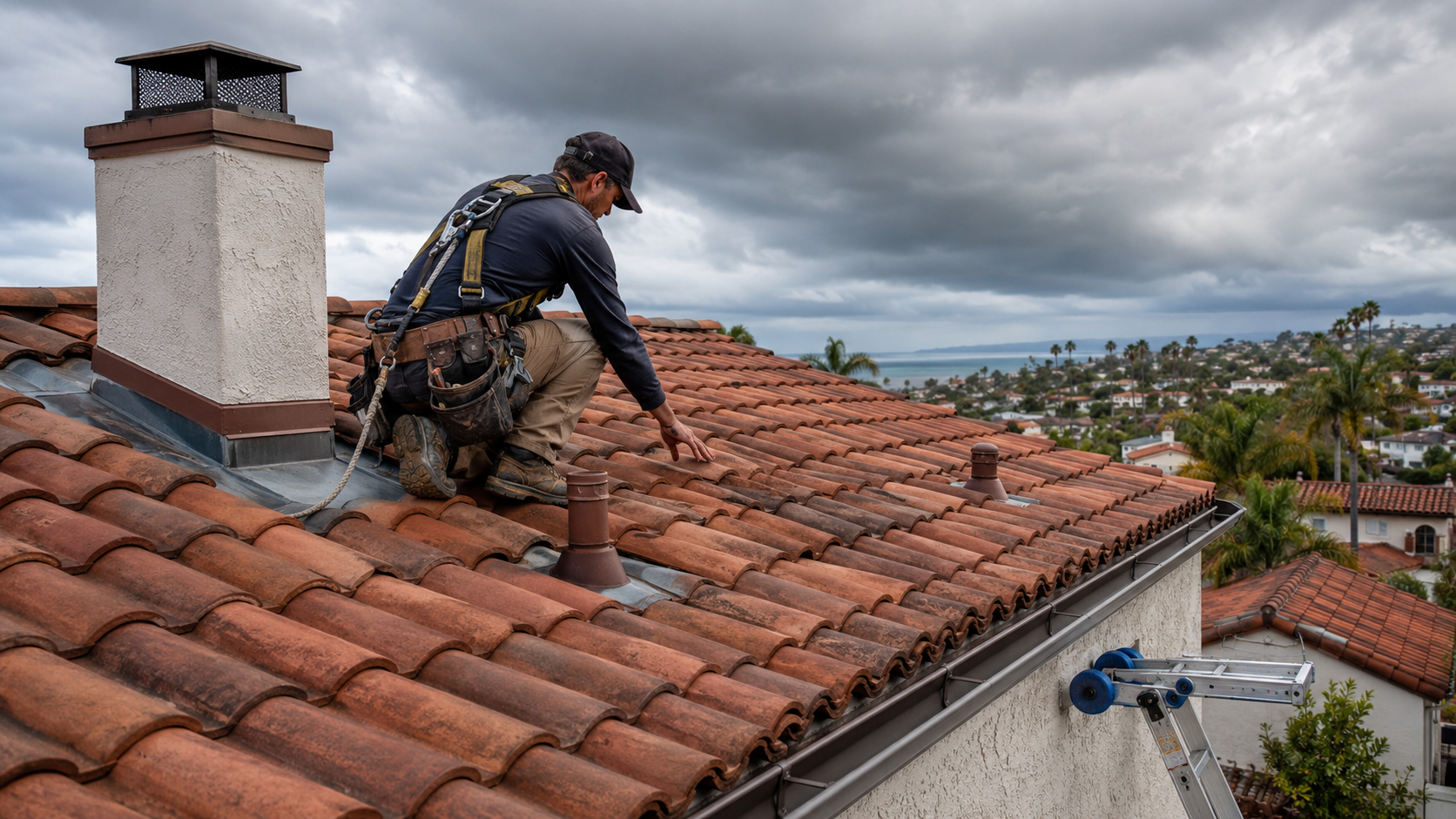
Before the rainy season, homeowners should look for visible signs of roof damage, including missing, cracked, loose, or damaged roofing materials. Flashing around chimneys, skylights, roof edges, and other vulnerable areas should also be checked for signs of deterioration. Areas around vents and other roof penetrations can become potential entry points for water when materials or seals begin to fail.
Inside the home, water stains on ceilings or walls may indicate a previous or active leak. Homeowners should also pay attention to sagging or visibly damaged roof areas, previous leak locations, and debris that may have accumulated on the roof.
Some roofing issues aren’t easy to identify from the ground. Homeowners should avoid climbing onto a roof, particularly when it is wet, steep, or otherwise unsafe. If you notice warning signs or suspect damage, a professional San Diego roofing contractor can inspect the roof and determine whether repairs are needed before the next period of heavy rain
Check Your Stucco for Cracks and Water Damage
Stucco is a durable exterior material that works well for many San Diego homes, but it isn’t immune to cracking, deterioration, or moisture-related problems. Before periods of extended rainfall, homeowners should take a closer look at their home’s exterior and identify areas that may need attention.
Start by looking for visible cracks, discoloration, or staining on the stucco. Bubbling or blistering can also indicate that moisture may be affecting the surface or materials underneath. Other warning signs include soft or deteriorating areas, sections of stucco that appear to be separating from the underlying surface, and previous repairs that have started cracking again.
Not every small crack means your home has serious stucco water damage. Hairline cracks can develop naturally over time as a home settles or materials expand and contract. However, larger cracks, recurring cracks, staining, or deterioration may warrant further evaluation, particularly before the rainy season.
Water entering through damaged areas can potentially affect materials behind the stucco and may not always be immediately visible from the exterior. Addressing
suspected problems before repeated rainfall can help prevent further deterioration. If you’re unsure about the condition of your exterior, a professional stucco contractor in San Diego can evaluate the affected areas and determine whether repairs or more extensive stucco work may be appropriate.
Clean Gutters and Check Drainage Around Your Home
Keeping rainwater moving away from your home is an important part of preparing for periods of heavy rainfall. Gutters, downspouts, and exterior drainage systems help direct water away from the roof, exterior walls, and foundation, but they may not work properly when they are clogged or damaged.
Before the rainy season, remove leaves, dirt, and other debris from gutters and make sure downspouts are clear of obstructions. Check that downspouts direct water away from the home’s foundation rather than allowing it to collect nearby. Homeowners should also inspect exterior drains and remove debris that could prevent water from flowing properly.
Pay attention to areas around the property where water tends to pool after rainfall. Standing water may indicate a drainage issue that should be addressed.
Clogged or overflowing gutters can send water toward fascia, siding, stucco, exterior walls, and areas around the foundation. Regular gutter and drainage maintenance can help manage rainwater and reduce unnecessary moisture exposure around your home.
Inspect Windows and Doors for Potential Water Intrusion
Windows and doors are other areas where water can potentially enter a home during periods of heavy rain. Over time, seals and exterior materials can deteriorate, creating gaps that may allow moisture to penetrate around frames and openings.
Before the rainy season, inspect windows and exterior doors for damaged or deteriorated seals, visible gaps around frames, peeling paint, and other signs of wear. Inside the home, look for water stains, discoloration, or moisture around window and door openings. Drafts can also indicate gaps or deterioration that may deserve closer attention.
Pay particular attention to windows and doors that have leaked during previous storms. A leak that only appears during wind-driven or prolonged rain can be easy to forget once dry weather returns, but the underlying problem may still be present.
If you have noticed recurring leaks, damaged frames, or significant deterioration, consider having the area professionally evaluated. In some cases, repairing the surrounding materials may be sufficient, while older or damaged units may require window or door replacement to properly address the problem.
Look for Warning Signs Inside Your Home
Problems with a home’s exterior aren’t always immediately visible from outside. In some cases, the first indication of a roof leak, damaged stucco, or a problem around a window or door appears inside the home after rainfall.
Homeowners should watch for ceiling stains, wall discoloration, peeling or bubbling paint, and areas that feel damp to the touch. Musty odors can also indicate persistent moisture, even when there is no obvious standing water. Pay particular attention to moisture around windows and doors or areas where water becomes visible during or shortly after rainfall.
Keep in mind that the location where water appears inside the home isn’t necessarily where it entered. Water can travel along roofing materials, framing, or other components before becoming visible on a ceiling or wall.
Recurring stains or moisture shouldn’t simply be covered with new paint. Identifying and addressing the source of the water first can help prevent additional damage and determine whether repairs to the home’s roof or exterior are necessary.
Don’t Wait Until a Storm to Make Repairs
If you already know your home has an exterior problem, addressing it before the rainy season can be easier than waiting until a storm reveals additional damage. Preventive repairs give homeowners an opportunity to evaluate the issue, understand their options, and complete necessary work under more favorable conditions.
Depending on the condition of the home, this could include repairing damaged roofing materials, addressing cracked or deteriorated stucco, replacing failing windows or doors, or correcting other exterior areas that may be vulnerable to water intrusion. Not every issue requires a major renovation, and smaller repairs may be sufficient when problems are identified early.
Timing is another consideration. Roofing and exterior contractors can become busier during and immediately after major storms as homeowners discover leaks and other weather-related problems. Scheduling an inspection or necessary repairs in advance may provide more flexibility and help ensure your home is prepared before significant rainfall arrives.
If you’ve noticed existing damage or recurring leaks, consider having the affected area evaluated before the next storm rather than waiting for the problem to become more noticeable.
El Niño Home Preparation Checklist
Preparing your home before the rainy season can help identify potential problems before heavy rainfall arrives. Use this quick El Niño home preparation checklist to review the most important areas of your property:
- Schedule a professional inspection when damage is suspected or difficult to evaluate safely.
- Inspect roofing for missing, cracked, or damaged materials.
- Check flashing, vents, and other roof penetrations.
- Look for cracks, stains, or deterioration in stucco.
- Clean leaves and debris from gutters and downspouts.
- Make sure exterior drains are clear and water flows away from the home.
- Inspect windows and exterior doors for gaps or damaged seals.
- Look for water stains or moisture inside the home.
- Address known or recurring leaks before heavy rain.
Preparing Your San Diego Home for El Niño
No one can predict exactly how much rain San Diego will receive during the 2026–27 rainy season, but preparing your home in advance can help identify potential problems before significant rainfall arrives. Inspecting your home’s exterior gives you an opportunity to address damaged roofing, deteriorated stucco, failing windows or doors, and other areas that may be vulnerable to water intrusion.
GBC Remodeling serves homeowners throughout San Diego County and can evaluate roofing, stucco, windows, doors, and exterior remodeling needs. Addressing existing problems before the rainy season can help you better prepare your home for changing weather conditions.
Is Your Home Ready for the Rainy Season?
If you’ve noticed roof damage, cracked stucco, leaking windows, or other exterior problems, contact GBC Remodeling to schedule an evaluation and discuss your options before the next storm arrives.